| User |
Thread |
 |
 74yrs • M •  A CTL of 1 means that cturtle is a contributing member of Captain Cynic.  |
 |
Lunacy & Science |
I recently was posting in another thread so I started to look around at for other threads related to the subject. In seeking to expand on the present understanding of principles, I was seeking to give a fresh appoach to the subject. The subject that I am relating to is the factor of the earth's spin axis & it's rotational axis being different. The simple explanation being that 'a particle state of motion remains constant unless it is acted upon which changes that state of motion'.
Besides being a founding principle of Newtonian Physics, it is also a fiction . . . principles of physics are generated by separating them from other actions which is the reality of this world reducing them to their fundalmental aspects which are called Laws.
Some say "seeing is believing" so how does one show that the earth's ratational & spin plane are not the same? Well, put up a few million or so & get a ticket on the shuttle, right?
| Permalink
"Terrorist or tyrant, few may come to the Truth that both are poor choice."
|
|
|
|
74yrs • M • A CTL of 1 means that cturtle is a contributing member of Captain Cynic. |
I noted that there has been no responce but I also noted that there were a few views so I will try to remember what I started the thread & try to continue, may be some will find it useful? In general I was thinking on Newton's Law but didn't want to accept it as the cause (answer => understanding based upon it) #1 were consideration of the earth's orbit which I related to the moon's orbit (where I errored) #2 considerations of centrifical forces #3 Well, maybe I can remember the rest as I go along? Oh, ya it dealt with conic section. #1 So about now you are thinking what is this guy going on about that is so easy? Right , I thought so too, easy common experience . . . kids on the playground playing on the merry-go-round everyday! So you have one kid getting on it & leaning back to associate posture with the earth's spin axis & he rotates around . . . wait that doesn't work? the kid leans away from the center of rotation on at one point still is leaning away from the center at the opposite point? quote:
About now I start to question my own belief, cause I start to think why wouldn't the earth axis like the kid point outward? I mean like the particle in the box, right
So I rerun the scenereo with the moon being the kid and the earth being at the center (here is where I introduced error). Of course I run into the same problem {No?} After all the earth's spin axis & the moon's rotational axis are the same? Now, the moon doesn't spin so the face (light side?) is always facing the earth right? Now I am getting worried because this has become more confusing . . . In the first scenereo the natural order is the earth's spin axis maintain it's alignment but in the second the moon like the kid on the merry-go-round faces the center not maintaining his alignment as the earth does . . . unless of course when they talk about the dark side of the moon always facing away they mean that the side upon which the sun shines uponis always facing the sun? then when we see a partial moon (phases) so the light side is the face & the dark portion we bearly percieve is dark so we don't see it as facing the earth? Man, forget this, time for another approach.
| Permalink
"Terrorist or tyrant, few may come to the Truth that both are poor choice." [ Edited by cturtle at
]
|
|
|
|
74yrs • M • A CTL of 1 means that cturtle is a contributing member of Captain Cynic. |
In dazes of olde when knights were bold & even those who raised themselves to lofty thoughts believed earth to be the center axis upon the heavens did roll. So could an explanation be for the sun, earth & moon and why the changes in seasons? Looking up a term in a science dictionary, I noted that they gave an ellispe as a non-perpendicular slice of a cone. So if the orbit of the earth is likewise above & below the central axis of the sun (at sufficent distance) then the southern (pole)hemisphere would recieve more light when above the perpendicular & the northern (pole) hemisphere would receive more ight when below it. Well that wasn't particularly hard so why would people accept that the earth spin axis would remain aligned to one direction? that the north pole points toward the north star or the south pole points toward the (galaxy) Southern Cross? But they had long accepted the heavens revolving around the earth so that they could easily believe? Now, we know the earth axis of rotation varies about 23 degrees from that of earth's axis of spin but how did they show this to be true? quote:
Ol'Chris supposedly noted the mast diappearing on the horizon & decided that the earth was round.So his interest in sailing may have added considerations of tides & the moon?
Such as being aware of the boom when coming about as the prevailing wind swings around as the ship turns (tacks)against the wind?
We naturally assume that is because of the earth's spin that this is true?
| Permalink
"Terrorist or tyrant, few may come to the Truth that both are poor choice." [ Edited by cturtle at
]
|
|
|
|
46yrs • M • A CTL of 1 means that Wayback is a contributing member of Captain Cynic. |
Speaking of crazy science I watched some history channel science program that based advances in science to a fictional spacecraft? then they used this base as a sounding board for their theoritical propulsion & weapons using antimatter as an energy source  quote:
Now, we know the earth axis of rotation varies about 23 degrees from that of earth's axis of spin but how did they show this to be true . . . We naturally assume that is because of the earth's spin that this is true?
Ya right, Newton's principle For every action there is an equal & opposite reaction . . . no wait a minute: a particle in motion maintains that motion unless acted upon to change the motion. Therefore the earth/moon rotation produces a gyroscopic action which is maintained. This motion maintains the alignment of the earth's axis . . . http://jimcolyer.com/papers/entry?id=2 quote:
Over time, the earth has slowed the moon's spin until it keeps the same side to us. The moon experiences 2 weeks of daylight followed by 2 weeks of night. There is no such thing as a "dark side" of the moon because the side we do not see gets 2 weeks of light each month.
|
|
|
|
46yrs • M • A CTL of 1 means that Wayback is a contributing member of Captain Cynic. |
So does the moon/earth act as a gyro thus the restoring force maintaining alignment of our poles?
First concern if it is true would be does the gyro with fixed gimbles reasonably represent similar dynamics? #1) thing is even the toy gyro or top tends to roll around a bit before centrifugal force acts to stabilize & right itself => one may tend to see the force applied as acting perpendicular to that of gravity. As the gyro will extend itself parallel to the floor if it is suspended by a looped string indicates that rotational forces of the gyro act on (require) a resistant body or force to react the point of interaction?
Long winded statement to ask 'The top acts against the floor, the gyro acts against the string so what does does the moon/earth rotatioal force act on?
|
|
|
|
46yrs • M • A CTL of 1 means that Wayback is a contributing member of Captain Cynic. |
Strange isn't it Statement of Realitivity. Although the application of mathematical formula, the distinction is based on velocity . . . actually I ahould say the rotational velocity and density of the masses? So if the laws governing actions & reaction are applicable to the the basic units (particles) which the construct of planets and atoms then why do they act os differently? Galaies (big bang) theories don't seem to fit into the physics of high speed particles yet according to our theories, they must have a common source. What is the fundamental misconception that we don't comprehend? |
|
|
|
46yrs • M • A CTL of 1 means that Wayback is a contributing member of Captain Cynic. |
Hmm . . . the same principles apply to the particles as atoms & molecules as they apply to solar systems & galaxies. Yet they seem to act/react so differently? At one level they exist in a state of random order yet they give (order) structure to all that exist? On the other we have stars & planets which have there order of rotations & spins, of magnitude & distance in which they each interact and form the heaven's? Yet the same force of attraction is operational relative to their existence! The same Laws (values) apply but what of charge (+, -)? The forces of charge ions is a major contributer to our exist, they produce the driving force for chemical reactions. Yet they play no role in our galatic existence?  Just my strange pattern of thought, strange thing about earth/moon rotational bit, it is kind of like the chicken & the egg thing. which came first? *note their is a distinction between these thing as they exist, even if it is relative . . . |
|
|
|
44yrs • M • A CTL of 1 means that Roninheart19 is a contributing member of Captain Cynic. |
"Of course I run into the same problem {No?} After all the earth's spin axis & the moon's rotational axis are the same? Now, the moon doesn't spin so the face (light side?) is always facing the earth right? Now I am getting worried because this has become more confusing"
-Actually, the moon does indeed rotate, but at the same speed as it orbits the Earth. So, in the 27.32 days it takes the Moon to go around Earth, the Moon also spins about its axis one full revolution. That's why we always see the same face of the Moon.
Now, the interesting part: why does the Moon spin about its axis at the same rate it orbits? In the distant past, the Earth's tidal pull on the Moon slowed the Moon's rotation to match the time it takes to go around Earth. In our solar system, almost all moons spin at the same rate as they orbit. We think the exceptions are ex-asteroids captured so recently that tidal forces have not yet equalized the orbital and rotational periods.
|
|
|
|
44yrs • M • A CTL of 1 means that Roninheart19 is a contributing member of Captain Cynic. |
Some say "seeing is believing" so how does one show that the earth's ratational & spin plane are not the same?
-SEASONS! =D
The Earth's axis is tilted from perpendicular to the plane of the ecliptic by 23.45°. This tilting is what gives us the four seasons of the year - spring, summer, autumn (fall) and winter. Since the axis is tilted, different parts of the globe are oriented towards the Sun at different times of the year.
Summer is warmer than winter (in each hemisphere) because the Sun's rays hit the Earth at a more direct angle during summer than during winter and also because the days are much longer than the nights during the summer. During the winter, the Sun's rays hit the Earth at an extreme angle, and the days are very short. These effects are due to the tilt of the Earth's axis.
As for how the earth became tilted; it's debatable, but here's what we have derived based on our observations of various nebulae..
The solar system started out as a large cloud of gas and dust called a nebula. This cloud was not uniform so when it started to collapse because of gravity, it didn't collapse evenly and it started to rotate. As it collapsed more and more the rotation increased, much like a figure skater increases her spin by drawing in her arms. The central portion eventually formed the sun. Around the sun, other parts of the cloud began to condense and form small bodies called planetesimals. These were about the same size as the larger asteroids are today. As these planetesimals moved around the sun, they gathered more and more material until the reached the size they are today. They were already moving around the sun in orbits and probably had some spin from the collapse of the original nebula. Because of the spin and the motion around the sun, these planetesimals didn't grow uniformly. This is probably where the tilt of the planets comes from and the reason that the tilt for each planet is different. Uranus, for example is tilted almost 98 degrees.
When the earth was forming, we know that objects of various sizes struck it early in its history. In fact, the current best theory of the formation of the moon is that a planetesimal about the size of mars[!] struck the earth and the ejected material formed the moon. What was not ejected merged to form the current planet earth..
|
|
|
|
46yrs • M • A CTL of 1 means that Wayback is a contributing member of Captain Cynic. |
quote:
-Actually, the moon does indeed rotate, but at the same speed as it orbits the Earth. So, in the 27.32 days it takes the Moon to go around Earth, the Moon also spins about its axis one full revolution. That's why we always see the same face of the Moon.
For every action there is an equal & opposite reaction . . . so the moon rotates because because of it's orbit? or is it that no force acts to rotate the moon, therefore it remains in uniform motion => non rotational motion? |
|
|
|
44yrs • M • A CTL of 1 means that Roninheart19 is a contributing member of Captain Cynic. |
quote:
For every action there is an equal & opposite reaction . . . so the moon rotates because because of it's orbit? or is it that no force acts to rotate the moon, therefore it remains in uniform motion => non rotational motion?"
The moon began to rotate due to something called angular momentum. There is no external force (other planetary objects etc.) that cause a planet or satellite (the moon in this instance) to BEGIN to rotate. It's the way the object is formed that causes it to rotate. before the moon was the solid object we see today, it was a bunch of scattered gas and matter that slowly started to coalesce. As this VERY large cloud of scattered pieces of matter started to come together into a smaller, more dense object, it started to spin due to conservation of angular momentum. With Angular Momentum, basically, if the radius of the orbit decreases, then its angular velocity must increase (spin). You can see this by watching figure skating. When they do their spins, arms stretched out, the skater will spin slowly. However, if the skater begins to pull their arms towards their body, the radius of their orbit will decrease, and due to conservation of angular velocity, when this happens, the velocity of the rotation will increase and they will begin to spin way faster. Like a bunch of particles stretched out slowly coming together to form a planet, or a moon. What keeps the moon's rotation speed in check is the moon's own gravity along with the tidal forces of the earth pulling on one side of the moon more than the other. This uneven attraction creates a small bulge on the moon, which also creates torque, which over millions of years slowed the rotation of the moon down until the spin of the moon equaled its rotation period. Once this occurs, the bulge of the moon is always in line with the earth, the torque which acted to slow the moon down disappears (because the bulge is no longer rotating out of sync with the earths pull), and we always see the bulge. |
|
|
|
74yrs • M • A CTL of 1 means that cturtle is a contributing member of Captain Cynic. |
quote:
The moon began to rotate due to something called angular momentum.
Yes, we tend to use different forms in discussing reference frames; one is the gives the coordinates as intersecting lines but we also use a system based on a center point & the point where those lines intersect) & a circle thus the distance other points is called the radius & the direction (usually given as a radian or degree) > So then angular momentum is also called rotational momentum. But then momentum is an aspect of inertia? Therefore the extension of mass rotating at some velocity has the aspect of inertia which increases the velocity (rate of spin) when the extended mass is moved closer to the spin axis. But because the earth is composed of iron (etc), the earth's rotation also forms an electromagnetic force which produces (changes) the direction of the spin axis & the moon's rotational plane from that of the plane of rotation of the solar system in which the planets rotate around the sun. Because the inertial mass of planetary is much greater than the electromagnetic forces (ratio of relative proportion) these are weak but because of the iron core of the earth, these forces are strong enough to change the plane of the earth's rotation & it's spin axis.
| Permalink
"Terrorist or tyrant, few may come to the Truth that both are poor choice."
|
|
|
|
74yrs • M • A CTL of 1 means that cturtle is a contributing member of Captain Cynic. |
quote:
http://en.wikipedia.org/wiki/Nuclear_fusion
A better way to teach this subject is from the stand point of Chemistry & the Periodic Table. The reason being that the system of filling electron orbital bears a direct relationship with the nucleus. Using the understanding of chemical bonding extends the creation of intermediate steps or bond formations, etc. Which extend into the nuclear aspect of the bonding orbitals (S, P, D & F)& how great role they play in nuclear chemistry. Basic electron in its orbital form implies the nucleus aspect that form is an required to be 'stable' element.
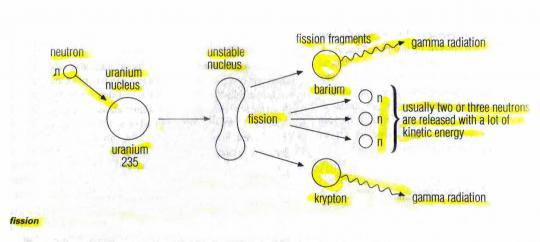
First of the filling order of shell theory requires a central formation to exist a filled 1S orbital is the point upon which atoms spin, all other orbitals are formed around the nuclear center of individual atoms. The 2s/2P shell is the next extension into *'Our Space'; we should take note that as we progress tend to increase at regular intervals. For a heavy nucleus to separate into two separate particles then each of these created particles must conform in its atomic structure which extends that it must conform to the electron configuration as well.It needs a filled 1S orbital at its lowest (closest) level! Secondly we note that there is a 'transitional phase' as the upper level orbitals make the transition to those lower energy levels. Which is further complicated as the order is an increasing function therefore at these intervals, the next orbital function doesn't have an orbital configuration. Thus any such shift would require removal of whole subshells to conform to the lower configurations. Therefore what causes the pulse is as these upper orbitals formations (inclusive of it's proton_ic & inertial {nucleus} formations) must descend to lower levels; formation of various particles as orbital configurations separate therefore acquire the 1S formation or is unstable. As the inertial aspect of this descent move involve forces similar in aspect to a spinning skater, producing the hot or radioactive aspect. Just another way of looking at it.
| Permalink
"Terrorist or tyrant, few may come to the Truth that both are poor choice." [ Edited by cturtle at
]
|
|
|
|
46yrs • M • A CTL of 1 means that Wayback is a contributing member of Captain Cynic. |
quote:
Therefore what causes the pulse is as these upper orbitals formations (inclusive of it's proton_ic & inertial {nucleus} formations) must descend to lower levels; formation of various particles as orbital configurations separate therefore acquire the 1S formation or is unstable. As the inertial aspect of this descent move involve forces similar in aspect to a spinning skater, producing the hot or radioactive aspect.
|
|
|
|
74yrs • M • A CTL of 1 means that cturtle is a contributing member of Captain Cynic. |
As the header states is the lunacy & science . . . Matter is neither created nor destroyed . . It is only changed in form! Ya , right . . . "A tree grows , I cut it down, cut it into planks & build my house . . the house burns down? Call the insurence company, they say don't worry your covered . . . it wasn't destroyed, it was only changed in form!" So In many respects , that form is the significant aspect quote:
PS: Sometimes I wonder if other can understand what I am trying to say? Look at it as if it were a diamond . . most of us don't really know what it takes to cut a diamond but we can understand that rather than having one large flawed diamond then it may be cut so as to break at the flaw producing two smaller but better quality diamonds . . .
| Permalink
"Terrorist or tyrant, few may come to the Truth that both are poor choice." [ Edited by cturtle at
]
|
|


 My Posts