| User |
Thread |
 |
 40yrs • M •  A CTL of 1 means that summit is a contributing member of Captain Cynic.  |
godsnotanidea: You have obviously misread. I never refused logic. I said it was part of my individual reality. Perceptual phenomena are objects of exact. That first principles are individual perception, not universal absolutes. Your thinking is too confined. That link was directed to the post below the evolution post. I assumed that was clear. quote:
Reason cannot come from non-reason. Since thought is a mechanism of reason, it follows that random chemical reactions (non-reason) cannot produce thought (reason).
Your words don''t make sense. Random chemical reactions do produce thought. Emotion is logical. Its well established in psychology and neurology. quote:
Perhaps logic is a part of God; this would eliminate all need for God to create logic, as logic would have existed as a part of Him already.
Your just guessing now, without a foundation of reasoning. This doesn't even explain comprehensively the 'need' of Gods motives. Logic is more powerful than 'God'. If there is a logical reason why God exists, then logic created God, is all-powerful and restrains God. If there is no logical reason why God exists, then it holds that the Universe could exist for no logical reason and therefore require no creator. If God has logical thoughts then logic is more powerful than God. If God chose to create anything it must have had reasons to do so, therefore logic will have been dictating God's thoughts from the moment of God's inception. If God thinks logically, then logic must have existed before God and God did not create logic. If there is a logical reason why God exists, then logic is more potent than God and restrains God. If there is no logical reason why God exists, then it holds that the Universe could exist for no logical reason and therefore require no creator. If it is true that God exists outside of time and therefore "everything has a cause" does not apply to God then it is equally possible that logic, not God, is what exists outside of time and requires no cause. To say that god doesn't obey logical rules, to say that God could create a round square, for example, is to say that the abilities of god are abilities that cannot logically exist. 'God' is an illusion. 'God' is a human construct. Remember that your context affects your perception of 'truth'.
| Permalink
"The summit is just a halfway point"
|
|
|
|
41yrs • M • A CTL of 1 means that etherealmeekle is a contributing member of Captain Cynic. |
quote:
Emotion is logical. Its well established in psychology and neurology.
Why is it that two people going through the exact same event have completely different emoitional responses? If emotions were logical then you could say this action will bring this emotion. But this is not the case. quote:
If there is a logical reason why God exists
There may well be a logical reason as to why God exists but not being super natural being I doubt we could understand. You seem to be under the impression that God cannot exist because He is too complex.
| Permalink
"Speak out, even if what you have to say is unpopular"
|
|
|
|
40yrs • M • A CTL of 1 means that summit is a contributing member of Captain Cynic. |
quote:
Why is it that two people going through the exact same event have completely different emoitional responses?
Our emotions are mainly dependent on how we evaluate ourselves, events that befall us, our actions and the actions of others. During our lives everyone establishes a basic understanding of ourselves and the world around us. Therefore people are going to differ with regard to the styles of thinking they engage in on a regular basis, and hence differ in emotion. quote:
You seem to be under the impression that God cannot exist because He is too complex.
Read my last post again thoroughly, and really think about it. It explains the simple contradiction of 'God'.
| Permalink
"The summit is just a halfway point"
|
|
|
|
41yrs • M • A CTL of 1 means that etherealmeekle is a contributing member of Captain Cynic. |
quote:
Our emotions are mainly dependent on how we evaluate ourselves, events that befall us, our actions and the actions of others. During our lives everyone establishes a basic understanding of ourselves and the world around us. Therefore people are going to differ with regard to the styles of thinking they engage in on a regular basis, and hence differ in emotion.
So the only logic to emotions is that they happen? Can you always determine an what an emotional response will be? quote:
Read my last post again thoroughly, and really think about it. It explains the simple contradiction of 'God'.
Your post explains nothing except that because God may be able to do things beyond your comprehension He must not be real.
| Permalink
"Speak out, even if what you have to say is unpopular"
|
|
|
|
40yrs • M • A CTL of 1 means that summit is a contributing member of Captain Cynic. |
ethereal:The post explains that Logic is more powerful than 'God'.
Regarding emotion: The logic is that emotions are relative. You know this. For example, right now you may have anxiety about this discussion, whilst I may be completly calm. Emotional responses are confined by the logic of cause and effect. If you can pin-point the cause, the effect (in this case the emotion) is easier to determine.
Back on topic.
|
|
|
|
41yrs • M • A CTL of 1 means that etherealmeekle is a contributing member of Captain Cynic. |
It explains nothing. You simply state that God is subject to logic and therefore He it over powers Him. Your conclussion proves nothing.
God has emotions but is not controlled by them. God can act of His own free will in any logical or illogical way He chooses. And why must you limit God and say that He cannot do something that you consider illogical?
| Permalink
"Speak out, even if what you have to say is unpopular"
|
|
|
|
40yrs • M • A CTL of 1 means that summit is a contributing member of Captain Cynic. |
It seems your still confused. The ideology of 'God' is illogic.
| Permalink
"The summit is just a halfway point"
|
|
|
|
41yrs • M • A CTL of 1 means that etherealmeekle is a contributing member of Captain Cynic. |
Only because you cannot comprehend it. The only arguement you have is that you don't understand God and therefore He cannot exist.
| Permalink
"Speak out, even if what you have to say is unpopular"
|
|
|
|
40yrs • M • A CTL of 1 means that summit is a contributing member of Captain Cynic. |
quote:
Only because you cannot comprehend it.
Ethereal: Your contradicting yourself now. You did claim that your 'God' can think logically and illogically. I said that Gods motives are overpowered by logic, and that the ideology of 'God' is illogic. Yet you speak so fondly of 'God' yet it seems you continue to regurgitate things...with poor deduction. You claim you can reduce all truth down to a singular universal absolute. You have automatically introverted yourself the ultimate requirement to provide an 'absolute universal' reason and explination of what the universal truth is. Explain why you think 'God' is logic then. Universal truth is an empty abstraction. If your truth must account for all the facts, and if accounting for all the facts results in inconsistency; only the most empty abstractions can be true. If we knew all the facts, one individual's "truth" would be inconsistent with another's, and therefore universal truth regarding 'God' is false. "God, the illogic! The impossibility of communication in this house. The sheer operation alone of getting something through to somebody" Sylvia Ashton-Warner. My golly gosh have we gone slightly away from Jesus's death was faked. |
|
|
|
36yrs • M • A CTL of 1 means that the great focy is a contributing member of Captain Cynic. |
No he's dead. Very dead.
| Permalink
"I can't believe I ate the whole thing"
|
|
|
|
41yrs • M • A CTL of 1 means that Timmo is a contributing member of Captain Cynic. |
what i find in these threads is no one is open minded enough to really think, is what we hear at church or form th epopes mouth himself the real story, i say the whole jesus thing is very much gorified. Open your mind to more posibilities. I fid Summit has a very good point. As for his resurection, y would he hve had to have resurection when he could go to heaven, yes patrish i no, how would he see the appostles well god himself has appeared with many angels that have died. No there was no resurection as we do not resuectt
| Permalink
"There is no such thing as innocence obly degrees of guilt"
|
|
|
|
28yrs • M • Peacetoall is new to Captain Cynic and has less than 15 posts. New members have certain restrictions and must fill in CAPTCHAs to use various parts of the site.  |
First off weither jesus lived or not is questionable was he the son of god is questionable but what is truth is we don't know nothing about nothing and never will.The more knowledge we get the more questions we have. I been contimplating this for years now and i finally realize it really does matter. Even if there is a God religion is wrong its just humans trying to explain something they don't know anything about which can't be done. Just like any good story what the story is about matters little but the message is a completely different story. I have read some of the bible though im not a christian and there is a lot of truth in there but they story is just filler to get the readers attention possibly. The only thing that is important is now not the future not the past. There is a poem desederata and it sees beleive in god what ever you concieve him to be and really we don't understand the first thing we can't even prove there was a god in the first place. What could have possibly created us was energy mixing with matter because if you can't tell, living things have both matter and energy with it in, rust is a mixture of energy and matter maybe the space rusted and thats were the dust comes from in the big bang theory maybe not who knows just something to think about.
With all that said its almost pointless to continue this post there is some truth we know some we don't. To stress yourself with imaginings _ _
Peace to All | | | |_ _ _
And im not seven im seventeen if anyone was curious. i bet thats gonna shock some people
|
|
|
|
36yrs • M • A CTL of 1 means that MugenNoKarayami is a contributing member of Captain Cynic. |
It may have taken me 3 hours to read this entire thread, but, I have finally done it... And out of everyone's posts and debating, Summits seems to make the most sense..He is the only who has thouroughly looked into the Christians "history" and has explained why and how it simply couldn't have happened. Apparently, no one could really keep a straight story or even prove what happened.. On top of that, why would they make claims hundreds of years or how ever many after the event occured? Did they need that much time to try and work out all the kinks in their story? This is exactly why I do not believe in God, because you cannot just say he is too complex. Defintely not a good defence.
I'm kinda fried from reading this entire thread, soo I apologize If this is not making sense to any of you or not accurate to what was was said. Kinda losing my train of thought but I did have a good reply and question(s)... XD
I think it was somewhere along the lines of Why would Jesus fake his death? What was the purpose of the Guilt Trip?
[going off topic]
And while im thinking of jesus, I recall hearing something aboutt he bible leaving out a large portion of his life... Does anyone know what I'm talking about? And if so, Do you have any thoughts of what was going on at that time to where it was left out?
Well I think im gunna go lay down now because I believe this is about all I can handle for a little while.. Hopfully, there will be more intresting insight to Summit's posts, My views, And questions...
Take care.. <3
| Permalink
"I'm a human being, God Dammit!! My life has value!!!"
|
|
|
|
40yrs • M • A CTL of 1 means that summit is a contributing member of Captain Cynic. |
Appreciate your thoughts peoples.
Just to add something else. Not only has the divinity of Christ been given up, but his existence as a person and his death is being more and more seriously questioned. The question is one of tremendous importance. For both the Freethinker, as well as for the Christian, it is of the weightiest significance.
The question is -- what does history say? And that question must be settled in the judgement of historical criticism. If the thinking world is to hold to the position that Christ was a real character, and that his death was 'real', there must be sufficient evidence to warrant that belief.
Something else that is interesting and significant is that it took Christianity 800 years to develop the symbol of its suffering Savior. How should we explain the fact that within the first eight centuries of the evolution of Christianity, Christian art represented a lamb, and not a man, as suffering on the cross for the salvation of the world? The human figure on the cross was never pictured on the paintings in the Catacombs nor the sculptures on Christian tombs. Everywhere a lamb was shown as the Christian. Why then should we believe in the Crucifixion.
If Christ performed the 'miracles' that the New Testament speaks so fondly about, then why would people want Jesus to be crucified. Is this history or fiction!?
Also, the early Gnostic sects even denied the physical existence of Jesus. Germany's great ecclesiastical historian, says: "The Christ of early Christianity was not a human being, but an "appearance," an illusion, a character in miracle, not in reality -- a myth.
The Christian church is older than the oldest Christian writings. Christ did not produce the church. The church produced the story of Christ. Hence leaving, the freethinker to question the reliability of writers of christianity.
Perhaps, this leaves it to scientific inquiry. If no evidence for his existence and death can be found, perhaps Jesus then belongs to the mythical fictitious 'heroes' of the past.
| Permalink
"The summit is just a halfway point"
|
|
|
|
36yrs • M • A CTL of 1 means that MugenNoKarayami is a contributing member of Captain Cynic. |
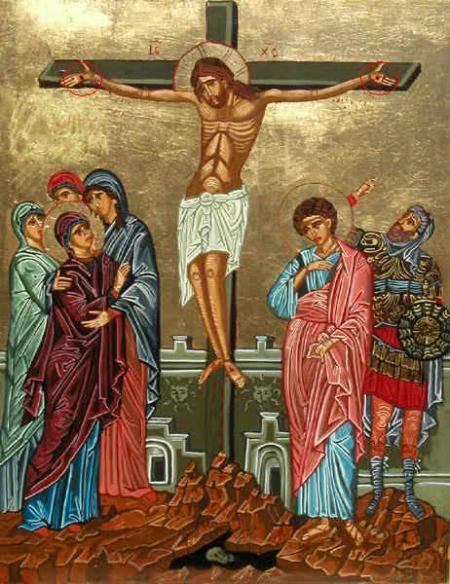
I don't know if this has any correlation to the thread but I noticed something when I was looking through old paintings and what not and I came across this picture... Now, If im not mistaken, Wouldn't it have made more sense to have the nails through his wrist rather than his palm? Unless his head and torso were stabalised as well, surely the nails could not support the weight of his body//
| Permalink
"I'm a human being, God Dammit!! My life has value!!!"
|
|


 My Posts